Tom the Cat: History, Origins, and Cartoon Facts
Thomas "Tom" Cat stands as one of the most iconic and enduring figures in the history of world animation. Created in 1940 by the visionary animation duo William Hanna and Joseph Barbera for Metro-Goldwyn-Mayer (MGM), the character originally debuted under the name "Jasper" in the theatrical short Puss Gets the Boot. Throughout its classic theatrical run, the franchise revolutionized physical slapstick comedy through pantomime visual choreography, earning a record-tying 7 Academy Awards for Best Animated Short Film. Characterized by his rich expressive range and comedic resilience, Tom endures as a global benchmark of cinematic comedy and animation heritage.

Tom the Cat: History, Origins, and Cartoon Facts
In the golden age of American theatrical animation, few characters achieved the enduring global affection and comedic brilliance of Thomas "Tom" Cat. Created in 1940 by the visionary animation duo William Hanna and Joseph Barbera for Metro-Goldwyn-Mayer (MGM), this distinguished blue-gray domestic feline permanently revolutionized the art of physical slapstick humor.
Unlike standard cartoon antagonists of the 1930s and 1940s, Tom was designed as a deeply relatable character whose daily motivations stemmed from ordinary feline instincts: guarding the household pantry, enjoying peaceful naps, or carrying out the strict housekeeping orders of his owners. Audiences worldwide quickly developed an affectionate empathy for Tom's relentless determination, intricate mechanical traps, and indestructible resilience in the face of inevitable, chaotic backfires.
Spanning more than eighty years of continuous production across theatrical shorts, television series, and feature-length motion pictures, Tom remains an undisputed pillar of cinematic pop culture. Below is an exhaustive historical overview covering his initial debut as Jasper, the record-breaking Academy Award era, stylistic transformations under different animation masters, and verified trivia preserved in studio archives.
Origins and Narrative History of the Character
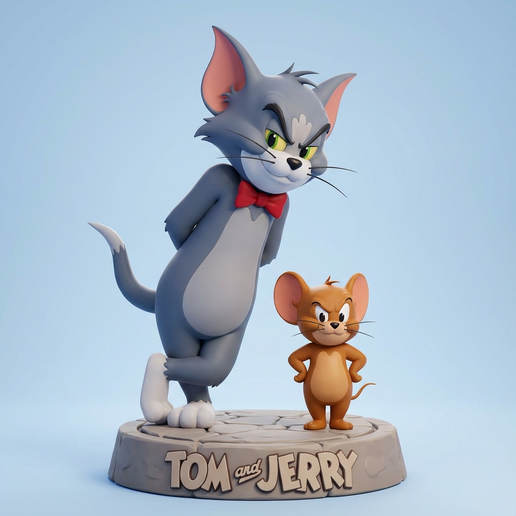
Tom made his silver-screen debut in Technicolor on February 10, 1940, in the theatrical short Puss Gets the Boot, produced by Rudolf Ising. In this initial appearance, the character was named "Jasper" and featured a more realistic, unkempt aesthetic characterized by scruffy fur, complex facial wrinkles, and quadrupedal feline movements.
Following the short's unexpected commercial success and subsequent Academy Award nomination for Best Short Subject (Cartoons), MGM studio executives authorized Hanna and Barbera to develop a dedicated series. To select permanent names for the characters, an internal studio contest was held. Animator John Carr won the $50 prize by submitting the winning entry: "Tom and Jerry", a name rooted in traditional English folklore and a popular nineteenth-century mixed drink.
Creators and the Golden MGM Era
Between 1940 and 1958, the original creative team of William Hanna and Joseph Barbera directed 114 theatrical shorts at MGM's Hollywood animation studio. This era is widely recognized by film historians as a pinnacle of handcrafted cel animation. The narrative relied entirely on pantomime and visual choreography, elevated by Scott Bradley's intricate musical scores, which combined jazz flourishes with classical symphonic leitmotifs to synchronize with every physical impact.
This classic era achieved unmatched critical acclaim, winning 7 Academy Awards for Best Animated Short Film (including celebrated masterpieces such as The Yankee Doodle Mouse, The Cat Concerto, and Johann Mouse), tying Walt Disney's Silly Symphonies for the most Oscar victories in a theatrical cartoon series.
Stylistic Evolution and Studio Eras
Following the closure of the original MGM cartoon studio in 1957, Tom underwent several distinct artistic and narrative evolutions:
The Gene Deitch Era (1961–1962): Produced in Prague, Czechoslovakia, by Rembrandt Films. This cycle introduced an avant-garde, surrealist tone with eerie sound design and heightened slapstick tension.
The Chuck Jones Era (1963–1967): The legendary Looney Tunes director took charge at Sib Tower 12 Productions, redesigning Tom with thicker eyebrows, a sleeker gray coat, expressive green eyes, and a more contemplative, aristocratic demeanor.
The Television and Modern Era:** From the 1970s onward, under Hanna-Barbera Productions, Filmation, and Warner Bros. Animation, Tom expanded into syndicated morning television, direct-to-video films, and major hybrid live-action/CGI theatrical releases.
Verified Facts and Production Trivia
The Voice Behind the Iconic Scream: While Tom is virtually silent throughout his theatrical career, his legendary high-pitched screams of pain and frantic vocal yelps were voiced by co-creator and co-director William Hanna himself.
Pianistic Precision in The Cat Concerto: In the 1947 Oscar-winning short The Cat Concerto, Tom’s fingerings of Franz Liszt's Hungarian Rhapsody No. 2 were animated with such technical accuracy that every hand motion strikes the corresponding authentic piano keys.
Canonical Full Name: In official studio production logs and franchise lore, Tom's formal registered name is designated as Thomas Cat.
Intellectual Versatility: Despite his comedic mishaps, Tom is portrayed across classic shorts as an exceptionally cultured feline: capable of reading complex chemistry formulas, conducting full symphonies, and playing the double bass.
Cultural Impact and Legacy
Tom redefined physical comedy by transforming animated slapstick into high-precision visual art. His character dynamic inspired iconic parodies and tributes across modern media, most notably The Simpsons' violent cartoon-within-a-cartoon, The Itchy & Scratchy Show. Beyond their eternal chase, the occasional alliances between Tom and Jerry against outside threats solidified their dynamic as one of the greatest rivalries and partnerships in entertainment history.
Frequently Asked Questions (FAQ)
What was Tom's original name in his first 1940 appearance?
Tom was originally named Jasper in the 1940 debut short Puss Gets the Boot. He was permanently renamed Tom beginning with his second cartoon in 1941.
How many Academy Awards did the original Tom and Jerry series win?
The original theatrical run directed by William Hanna and Joseph Barbera won 7 Academy Awards for Best Animated Short Subject.
Who provided the voice for Tom's famous screams?
Co-creator and director William Hanna recorded the unmistakable, high-pitched shrieks and vocal effects for Tom.
Conclusion
Tom the Cat stands as a timeless monument to the golden age of animation. His ability to evoke universal laughter across cultures and generations without speaking a word guarantees his permanent place among cinema's greatest comedic icons.
Referenced Sources
No comments yet. We invite you to share your perspective on this dispatch.
Conversation & Reader Perspectives (0)