Back to the Future DeLorean: History, Specs, and Facts
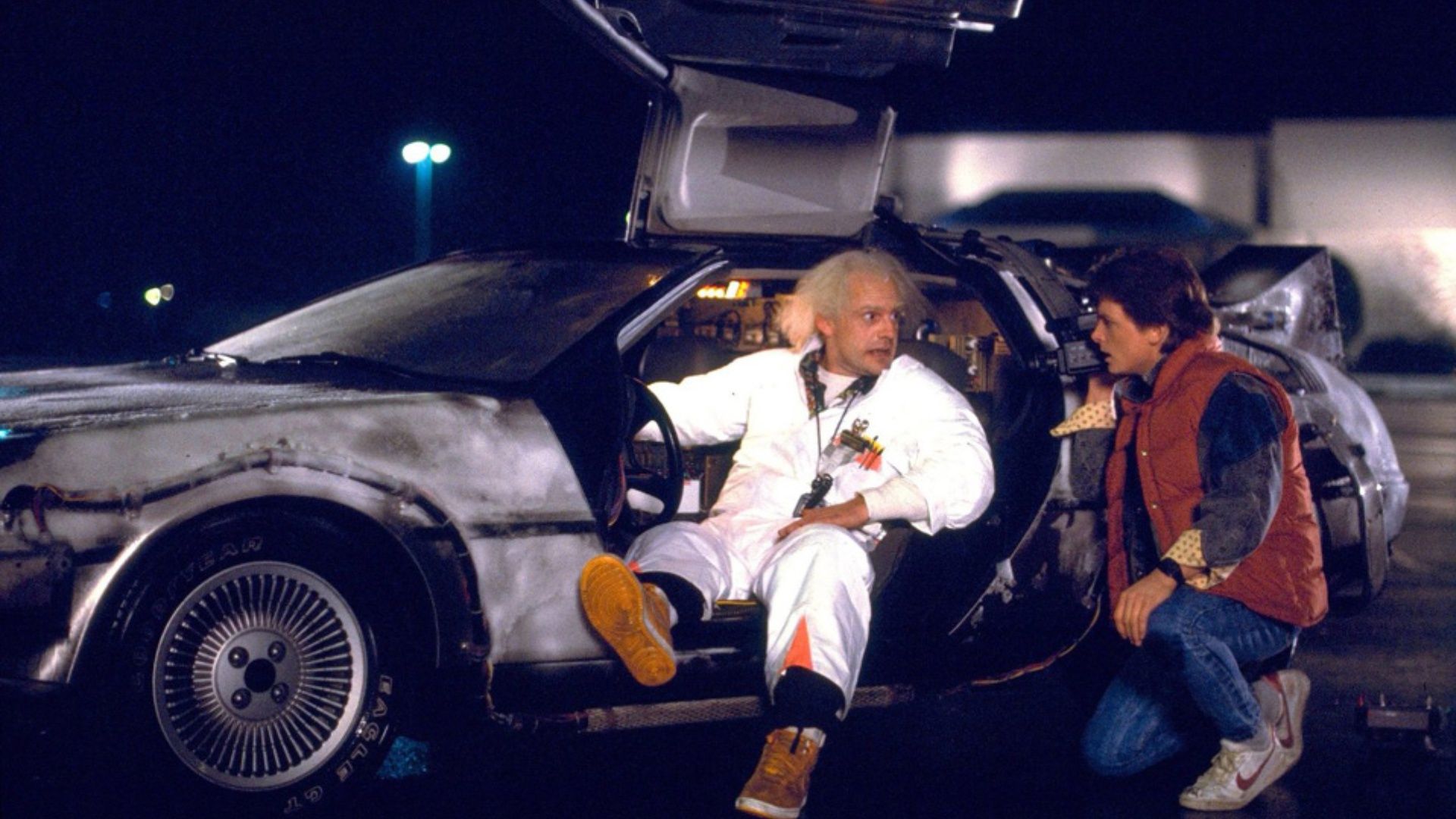
The DeLorean DMC-12 from Back to the Future stands as one of the most iconic vehicles in sci-fi cinema history. Styled by Giorgetto Giugiaro and adapted for the screen by Ron Cobb and Andrew Probert for Robert Zemeckis and Bob Gale's trilogy, this brushed stainless-steel machine with gull-wing doors transcended the commercial demise of its manufacturer to become a global pop-culture emblem of time travel.
Back to the Future DeLorean: History, Specs, and Facts
Few automobiles in the history of global cinema have achieved the enduring legendary status of the modified DeLorean DMC-12 from the Back to the Future trilogy (1985–1990). Conceived by director Robert Zemeckis and screenwriter Bob Gale, the stainless-steel sports car did not merely transport Marty McFly and Dr. Emmett Brown across the temporal continuum; it established itself as the defining technological centerpiece of twentieth-century sci-fi cinema.
The DeLorean's legacy represents a remarkable historical paradox. While the original manufacturer, DeLorean Motor Company (DMC), suffered financial ruin and ceased production in 1982, the release of the 1985 film immortalized the futuristic silhouette designed by John DeLorean and Italian stylist Giorgetto Giugiaro. With its bare brushed stainless-steel panels and gull-wing doors, the vehicle transcended its commercial failure to become a worldwide symbol of innovation, style, and cinematic nostalgia.
This comprehensive overview examines the development history of the time machine, production adaptations, technical specifications, and key verified trivia documented by filmmakers and automotive preservationists.
Origin and Narrative Development of the Time Machine
During initial drafting phases in the early 1980s, the time-travel mechanism was not conceived as a car. Early script iterations designed by Zemeckis and Gale featured a stationary device built from a modified household refrigerator or laser chamber mounted on the back of a truck. The refrigerator concept was ultimately abandoned due to practical safety concerns—specifically preventing young children from climbing into home refrigerators—and the narrative requirement for the machine to remain mobile and versatile.
The selection of the DeLorean DMC-12 provided a crucial visual and narrative payoff. Its unpainted space-age appearance justified the comedic premise of 1955 farm residents mistaking the arriving vehicle for an extraterrestrial spacecraft. In-universe, Doc Brown famously validated this choice with his iconic rationale: "If you're going to build a time machine into a car, why not do it with some style?".
Designers, Engineers, and Production Setup
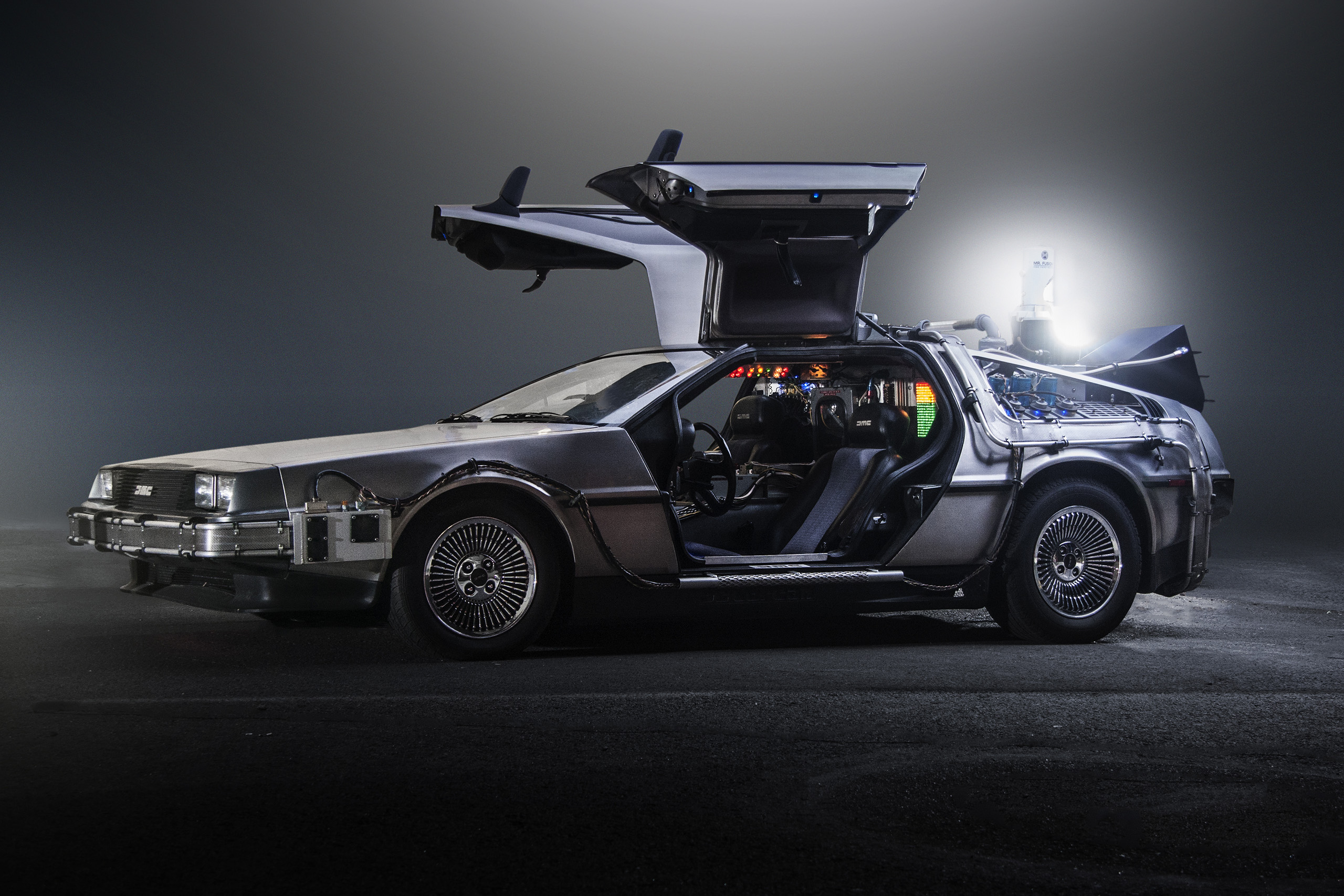
Transforming the production sports car into a functional movie prop was managed by renowned conceptual illustrators and production designers Ron Cobb and Andrew Probert. The team engineered the vehicle's signature components, including aircraft-inspired exterior cooling vents, exposed wiring conduits, dashboard digital time circuits, and the fictitious "Flux Capacitor"—the core technological component requiring 1.21 gigawatts of power to trigger temporal displacement at 88 miles per hour.
During principal photography across the trilogy, Universal Studios primarily utilized three distinct 1981–1982 DeLorean DMC-12 vehicles, categorized by crew members as the "A-Car" (the master hero car for principal actor shots), the "B-Car" (the stunt vehicle used for high-speed sequences), and the "C-Car" (a cutaway chassis sectioned for interior camera rigs).
Cinematic Evolution and Mechanical Upgrades
Throughout the three franchise installments, the time machine received distinct functional overhauls reflecting the narrative eras visited:
Back to the Future (1985): Standard configuration utilizing an onboard nuclear fission reactor requiring military-grade plutonium, alongside custom interior instrumentation.
Back to the Future Part II (1989): Retrofitting with a 2015-era Mr. Fusion Home Energy Reactor, replacing nuclear material with household refuse, accompanied by a 360-degree hover-conversion flight system.
Back to the Future Part III (1990): 19th-century rail-ready adaptation featuring fitted train wheels and a custom hood-mounted vacuum tube circuit board engineered from 1955 electronics.
Verified Facts and Production Trivia
Custom Speedometer Construction: Under 1979 US federal safety mandates regulated by NHTSA, standard vehicle speedometers could not exceed an 85 mph display. Prop masters created a custom speedometer gauge extending to 95 mph so the required 88 mph threshold could be visibly registered on screen.
Engine Upgrades for Stunt Work: The standard factory Peugeot-Renault-Volvo (PRV) 2.85-liter V6 engine generated roughly 130 horsepower, which proved underpowered for dynamic film maneuvers. Stunt coordinators swapped powertrains on designated stunt cars with higher-displacement V8 engines to achieve swift acceleration.
John DeLorean's Personal Commendation: Following the blockbuster premiere of the first film, John Z. DeLorean mailed a personal letter of gratitude to co-creator Bob Gale, thanking the filmmakers for preserving his automotive legacy for future generations.
National Historic Vehicle Register Induction: In December 2021, the restored original "A-Car" hero vehicle was formally entered into the National Historic Vehicle Register by the Library of Congress, cementing its cultural significance.
Cultural Legacy and Continuing Impact
The integration of the DeLorean into Back to the Future permanently transformed a discontinued sports car into one of the most recognized and sought-after vehicles in automotive history. Car collectors, restoration specialists, and film enthusiasts across the globe continue to maintain these machines, illustrating how cinematic storytelling can redefine real-world industrial artifacts.
Frequently Asked Questions (FAQ)
Why does the DeLorean have to travel at 88 miles per hour?
Co-writer Bob Gale stated that 88 mph was chosen because it was a distinctive, visually striking number that stood out clearly on digital instrumentation and was easy for audiences to remember.
How many real DeLorean cars were used during filming?
Three main vehicles were utilized during the original production (Cars A, B, and C), alongside a fiberglass shell model for flying sequences and additional components across the sequels.
What powers the DeLorean in each movie?
The first film relies on plutonium to generate 1.21 gigawatts of electrical power; the second uses organic matter processed through the Mr. Fusion generator; and the third utilizes a 4-6-0 steam locomotive to provide mechanical kinetic propulsion.
Conclusion
The DeLorean time machine stands as the ultimate synthesis of industrial styling and cinematic imagination. Its distinctive gull-wing silhouette and brushed stainless-steel finish remain the definitive visual benchmark of temporal adventure in film history.
Referenced Sources
No comments yet. We invite you to share your perspective on this dispatch.
Conversation & Reader Perspectives (0)